£500 off selected accommodation

Explore HallsExplore Halls
 Apprenticeship Course 

BEng (Hons) Civil Engineering Degree Apprenticeship

Course description

Launch your civil engineering career in Derby with a Degree Apprenticeship designed in partnership with leading construction and infrastructure employers. This programme combines academic study with practical experience, preparing you to meet the demands of a rapidly evolving sector.

The BEng (Hons) Civil Engineering (Apprenticeship) has been co-created with a diverse range of industry partners to ensure it reflects real-world needs. Employers including Kier, Seddon, Bentley, AECOM, Greenhatch, Waterman Aspen, Heidelberg Materials, and Devonshire Property Group have helped shape the curriculum, embedding the technical, digital, and sustainability skills required in today’s civil engineering roles.

Informed by employer feedback, the programme includes content on Building Information Modelling (BIM), REVIT, low-carbon construction, and infrastructure resilience. It also supports the development of key professional attributes such as ethical practice, leadership, innovation, and effective communication - preparing apprentices for long-term career success.

Who is this course for?

Our apprenticeship programme is suitable for individuals who undertake design, feasibility, project planning or site work for projects and operations in road, rail, water, infrastructure management, including safety and quality checks.

Civil Engineering Degree Apprenticeship logos
a young man with a paisley tie on

How apprentice Alex found his true calling

After several years and one wrong turn, Alex Johnson is now a happy man. He's working in the civil engineering sector, studying on our Civil Engineering Degree Apprenticeship, and is confident that this is the field he wants to forge a career in.

Find out more about Alex's journeyFind out more about Alex's journey

Strong professional credentials

This degree is accredited by the Joint Board of Moderators (JBM) comprising the Institution of Civil Engineers, Institution of Structural Engineers, Institute of Highway Engineers, the Chartered Institution of Highways and Transportation and the Permanent Way Institution on behalf of the Engineering Council as fully satisfying the educational base for an Incorporated Engineer (IEng).

Structure, certificates and assessment

The curriculum is mapped to the Civil Engineer Degree Apprenticeship Standard ST0417 (v1.1), ensuring apprentices gain the academic foundation and practical competencies expected across the sector.

This alignment supports Ofsted’s expectations for curriculum intent, ambition, and relevance.

A dedicated Industry Advisory Board provides continuous input, helping the programme stay agile and aligned with sector developments. This ensures apprentices graduate with the capabilities employers need - confident, capable, and ready to make an impact.

Study overview

  • Applied Mathematics 1
  • Construction Materials Technology 
  • Construction, CAD and Personal Development
  • Structures 1

Year 2:

  • Applied Mathematics 2
  • Geology and Soil Mechanics
  • Structural Design 2
  • Civil Engineering Construction and H&S
  • Surveying 1

Year 3:

  • Infrastructure Design and Materials
  • Geotechnical Engineering 2
  • Structural Design Project
  • Fluids and Drainage Engineering
  • Infrastructure Surveying and Asset Management
  • Construction Management 
  • Hydraulic Engineering or Infrastructure Surveying Design (select module option)
  • Complete Required KSBs for On Programme Learning - On the job/ and submit Gateway Documentation.
  • Project Proposal and ethical approval (signed off by university and employer).
  • Focus on independent application of learning and workplace integration.
  • Project and EPA (Through module)

The apprenticeship promotes British Values and safeguards vulnerable individuals from harm. These principles are embedded in the teaching and learning strategy and discussed during personal tutor meetings.

Bridge mechanism with cloudy sky behind
Shopping Centre building with Marks and Spencer signs

End Point Assessment (EPA)

The Civil Engineer Degree Apprenticeship standard includes an integrated EPA as part of the BEng (Hons) Civil Engineering. The EPA is delivered as a 40-credit module in Year 5, and apprentices must pass through the EPA Gateway before starting this final phase.

EPA components

The apprentice must submit a 10,000 word substantive technical project, based on a topic agreed with the employer, that showcases the knowledge, skills and behaviours (KSBs) of the apprenticeship standard to level 6+ to include:

  • A comprehensive presentation of the project plan
  • Outcomes and evidence aligned to the apprenticeship standard

A formal conversation with assessors to showcase competency across the KSBs mapped to this EPA method.

The assessment strategy is designed to be authentic, inclusive and aligned with EPA requirements with key features including

  • Real-world tasks reflecting industry standards
  • Flexible methods and reasonable adjustments for diverse learning needs
  • Clear, unbiased language and structured guidance
  • Formative feedback and access to support resources

Assessment Methods

  • Exams
  • Reports
  • Case studies
  • Presentations
  • Peer/self-assessments
  • Work-integrated tasks

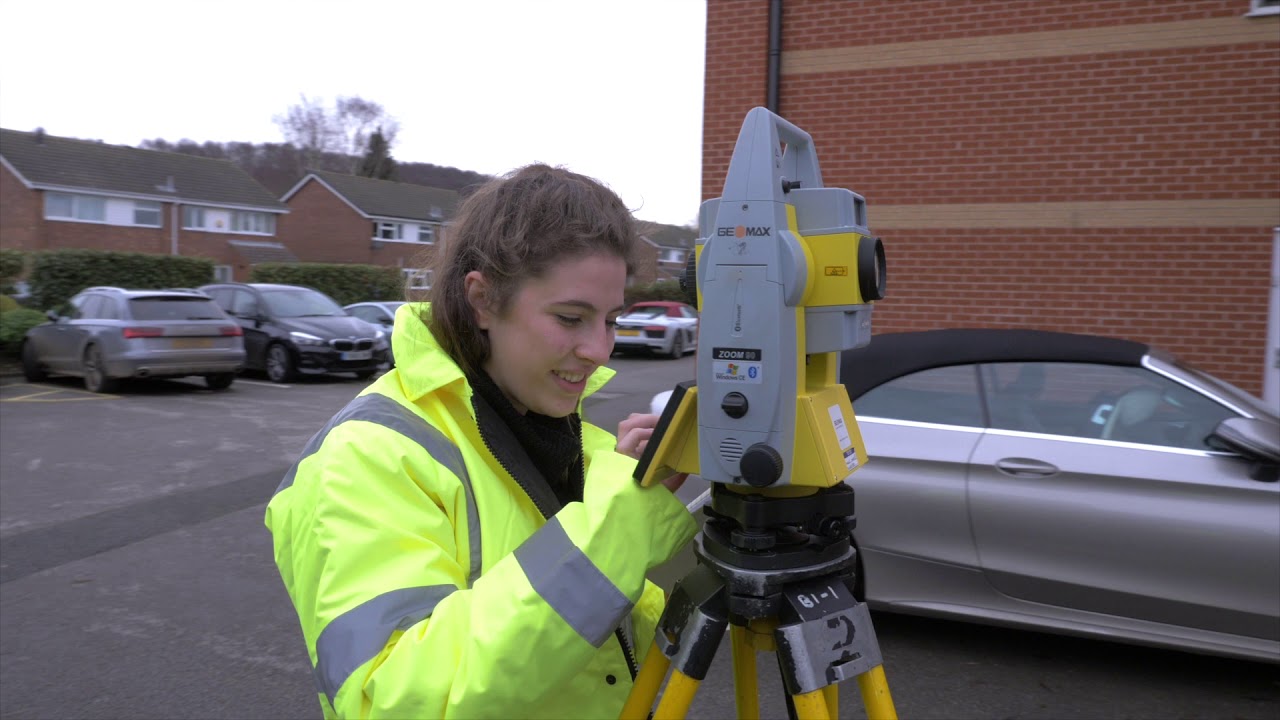
Why studying a Higher Degree Apprenticeship in Civils has benefited Anna

Girl in high vis jacket

View Why studying a Higher Degree Apprenticeship has benefited Anna video transcript

A person wearing a headset while in a virtual call.

Request more information about our apprenticeship programmes

Want to talk to a member of the team about our apprenticeship programmes? Make an enquiry and a member of our team will get in contact with to provide you with more information about our apprenticeships, and how our programmes can up-skill your workforce.

Request more information about apprenticeshipsRequest more information about apprenticeships

Benefits

Benefits to Employers

Support for Apprentices

We are committed to supporting your academic wellbeing and fostering an inclusive learning environment.

Academic support includes:

Upon completing the apprenticeship you can:

By the end of the apprenticeship, you may eligible to appy for IEng status. This may be undertaken alongside your EPA, subject to discussion with your tripartite reviewer to confirm whether the university's independent assessor can conduct the review or if a separate application to an Engineering Council - related institution is required. 

Entry requirements

Minimum academic qualifications of at least 96 UCAS points or above at A-level or equivalent, to include Mathematics plus at least one further STEM-based subject such as Physics, ICT, Computing and Electronics.

Apprenticeship candidates will typically have at least three A-levels at Grades A*-C including Mathematics and Physical Science or their equivalent or will have completed a Level 3 Apprenticeship as a Civil Engineering Technician, plus five GCSEs at Grade A-C including Mathematics, English Language and Double Science or equivalent qualification.

Individual employers will also set their own selection criteria and typical entry requirements. Direct entry at Level 5 (if allowed within the Levy) will depend on achieving recognition of prior learning equivalent to Level 4 of the degree.

This apprenticeship includes a degree in:

BEng (Hons) Civil Engineering (Apprenticeship)

To apply for this apprenticeship you must currently be in paid employment of at least 30 hours per week. Your employer must cover the costs of the apprenticeship.

Fees and funding

Employers

Cost of the apprenticeship will normally be in line with the funding band £27,000, but individual agreements will be considered depending on student numbers and involvement of employers.

Apprentices

Fees will be paid by your employer with government funded support or through the apprenticeship levy.

How to apply

Applications to this apprenticeship will need to be made through the employer.

However, you can find out more from us - please see below for contact information.

Who will teach you

Simon Wood monitoring a masonry wall

Dr Simon Wood
Programme leader

Simon is the Programme Leader for the BEng Civil Engineering (Apprenticeship) and has over ten years of teaching experience. He is a member of the Internal Masonry Society (MIMS) and has experience as a civil and structural engineer within a design consultancy. He is reading for a PhD in Masonry Design from the University of Leeds.

View full staff profileView full staff profile

Contact us

Apprenticeship Hub