Choose the foundation year route to build the skills, confidence and knowledge you need for success: you can gain your full honours degree in four years
Facilities include an Aquatic Research Facility, glasshouse, insectary, and specialist laboratories
Immerse yourself in a subject which is constantly evolving to address important 21st-century challenges
Gain a thorough grounding in traditional aspects of biology while discovering the latest research-led innovations
Enhance your practical experience through exciting work placement and internship opportunities. This course can be studied with or without an Industrial Placement Year
Get to grips with latest instrumentation and technology in our first-rate laboratories. Your studies won’t be confined to the laboratory as fieldwork is an essential part of the course
Draw on our extensive network of contacts and strong employer partnerships to broaden your professional outlook
Biology and Zoology - your questions answered
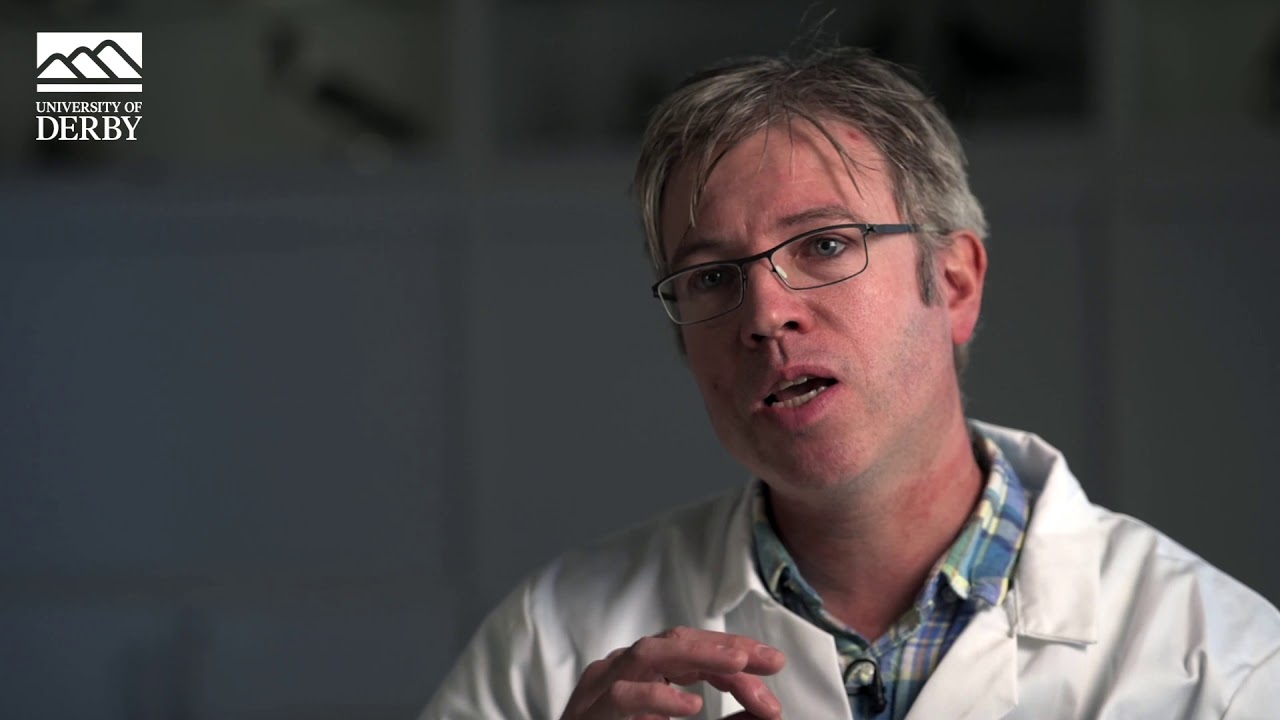
Programme Leader for Biology Dr David Elliott answers your frequently asked questions about Biology and Zoology.
Many Biological processes are essentially circular in nature, providing a model for transitioning society to a circular economy which engineers out material and energy wastage. Governments, companies and inter-governmental agencies are investing in Biology because they see this potential and the economic need not only for environmental solutions, but also for the significant business opportunities enabled by recent progress in the Biosciences. Enormous advances in DNA sequencing technologies and related “omics”, plus the computational capacity to support these are transforming our understanding of Biology, leading to opportunities for enhancing health, wellbeing, and environment. Hence, Biology is a highly inter-disciplinary subject where collaboration with the other sciences is of key importance to success, ensuring that Biologists can play a role in all walks of life.
The world is being severely impacted by human pressures including climate change, overexploitation of natural capital, and irreversible biodiversity loss on a massive scale. These and other issues collectively represent an existential threat to humanity, and biology is at the cutting-edge for providing sustainable solutions. This programme answers the call from the UN, through UNESCO’s Education for Sustainable Development (ESD), to address the urgent and dramatic challenges to our planet, and to people. The module content and practical skills within the curriculum prepare graduates to make a positive impact on climate change, biodiversity loss, unsustainable resource use and inequality.
For people who want to be part of these solutions Biology is the ideal subject - enabling graduates to enter the workplace doing jobs that make a difference whether that is in the lab, in the field, or in the office.
Expert teaching
You’ll be taught by a highly qualified team, including many international researchers whose work is shaping debates in areas including ecology, entomology and biodiversity. They publish influential papers, speak at global conferences, and serve on the editorial boards of scientific journals. You'll benefit from this research as your lecturers bring the latest thinking to your studies, and in some cases you will have opportunities to get involved in research projects yourself.
Dr Michael Sweet, for example, is now the manager of our Aquatic Research Facility and teaches on several of our undergraduate modules. He has won the prestigious Times Higher Education award in 'Outstanding Research Supervisor of the Year - 2025'. This nomination recognises his commitment to mentoring the next generation of marine scientists, leading to global impact. He is also involved in a major world-leading research project looking at diseases that affect coral reefs.
Our academics are working on a wide-range of research topics including:
Improving the resilience of coral reefs to climate change
Plant conservation and biotechnology
Biodiversity ecosystem functioning
Cell biology
The evolution of primates
Insect reproduction and behaviour
Animal ecology
Coral Reef systems and megafauna
Soil microbiology
How we're helping corals survive
Our Aquatic Research Facility is carrying out work with organisations across the globe to make coral reefs more resilient in the face of man-made afflictions.
Fieldwork is a vital element of our biology courses and so your studies will be enriched with fieldwork opportunities - the cost of mandatory fieldwork is included in your course fee. Through our fieldwork programme, we introduce students to a variety of survey techniques for a wide range of species, such as:
studying animal interaction at Twycross Zoo
conducting ecological projects in Mallorca
those selecting our optional Tropical Marine Biology module have undertaken scientific investigations in the Maldives
investigating plant adaptations at the Royal Botanical Gardens at Kew
exploring Toyota Motor Manufacturing UK Burnaston, to survey wildlife in their nature conservation area
You’ll also have access to Cuckoos Tor, a site on the edge of the Peak District National Park and owned by the University of Derby that is dedicated to long-term research and ecological experiments. Current projects include restoration ecology, natural flood risk management, community engagement with biodiversity, and sustainable land management - and you’ll be able to get involved.
For further practical experience, you'll have plenty of opportunity to apply for work placements and paid internships. All of this means you'll be well placed to launch your career, whether you are looking for a graduate job or are planning to go into further study or research.
"I went to Mallorca and the Maldives. Both were amazing. In Mallorca we surveyed rivers, mountains, forests, bird sanctuaries and nature reserves looking at all manner of species." Sam Lebbon, BSc (Hons) Biology, graduate
Partnerships to strengthen your knowledge
Once you have completed your Foundation Year, you'll have the chance to work with organisations such as Sea Life, Derbyshire Wildlife Trust, Derby Museums, and the Olive Ridley Project. These partnerships pave the way to work experience and internship opportunities where you can apply your skills in real world situations. They also give you access to field sites, employer-led projects and guest lectures – all of which broaden your perspective on the wealth of career opportunities open to Biology graduates.
We are currently working with Derbyshire Wildlife Trust and Derby City Council on rewilding Allestree Park. This is the UK’s largest rewilding space which has involved a community consultation to find out what local people want. Some of our students are already working on independent studies projects in the park, with one test-driving the citizen science protocols for monitoring the changes in the park as the rewilding continues.
We have also just won two associate Knowledge Transfer Partnership with Derbyshire Wildlife Trust, lasting two years, to predict the trajectory of rewilding ecosystems. This will enable you to learn about the remote sensing and modelling we use for this. It will also enable staff to further stretch their research impact in a complex and growing subject area, as well as providing the chance to apply cutting edge, technical research to commercial activities.
We have also been working for several years with Down to Earth Derby, on nature-based regeneration and connecting communities with nature and growing food. A major project we are working on at the moment, with the Eden Project, is a community garden on part of Sturgess Fields, a site owned by the University between Kedleston Road and Markeaton Street sites. The plan is to create a New Commons that will be managed with the community. There are lots of opportunities for you to work on here, both in creating and maintaining the site, undertaking ecological monitoring and getting involved in community education programmes.
Explore our specialist facilities
Gain practical, hands-on experience in our real world learning facilities. You will develop new skills and knowledge in your subject, supported by our expert teaching team.
► Aquatic Research Facility
Offers our students a unique opportunity to participate in high level research and work with some of the world leaders in the field of aquarium and zoo research.
► Bioscience Superlab
Our state-of-the-art Bioscience Superlab and Research Lab transforms learning and research for students, staff, and researchers offering real-world, sector-relevant practical experience.
► Glasshouse
Our glasshouse is used for keeping plants from a diverse range of habitats from deserts to tropics.
► Insectary
Our insectary houses many different species of insects for you to examine and learn about. It is also used by our Forensic Science students to investigate how they can assist in a forensic investigation.
► Scanning Electron Microscope
Our scanning electron microscope generates striking high-resolution images by magnifying objects from 20-30,000 times.
Boost your employability with a placement year
Take an optional placement year to put your skills into practice in a real-world setting. We will support you in finding a placement and throughout your time in industry. It’s a great way to gain valuable experience for your CV, build contacts, and explore career options before you graduate.
New Bioscience Superlab
Opened in 2025, our state-of-the-art Bioscience Superlab and Research Lab transforms learning and research for students, staff and researchers. These facilities house cutting-edge technology and offer real-world, sector-relevant practical experiences.
Please note that our modules are subject to change - we review the content of our courses regularly, making changes where necessary to improve your experience and graduate prospects.
Big spaces for big ideas
Kedleston Road offers it all: study in our largest library, relax in the Union Social Space, train in real-world healthcare settings, and stay active in our state-of-the-art Sports Centre.
The best way to find out if studying at Derby is right for you is to experience an Open Day. Get a feel for the city and campus, tour our first-class facilities and see where you could be living.
You’ll learn through lectures, seminars, tutorials, e-learning, hands-on laboratory practical work and fieldwork in the UK and overseas. Our varied teaching methods help you show your individual strengths and enhance your understanding.
Work placements
Placements allow you to develop the skills you learn at University and apply them to real world situations. This is something which potential employers are always looking for. We encourage you to gain experience with potential employers by offering internships and placement opportunities.
Assessment
You’ll be assessed using a range of written assignments including portfolios, practical and fieldtrip write-ups and data analysis, essays, computer-based assessments, poster presentations and seminar presentations, as well as traditional written examinations.
Helping you reach your full potential
Our Personal Academic Tutoring programme supports your academic journey, helping you achieve your goals and unlock your potential.
We’re proud of the achievements of our Biology graduates. Many have gone on to work as research scientists, laboratory and pharmacy technicians, healthcare assistants, medical laboratory assistants, wildlife conservation officers and scientific sales professionals. They regularly return to the University to deliver masterclasses and give inspiring talks to current students about life after graduation.
Our graduates have gone on to successful roles in areas such as:
Molecular consultant
Crop development scientist
Patent advisor
Biologics production technician
Quality laboratory manager
Aquaculture entrepreneur
Synthetic biology biotechnologist
Clinical trials co-ordinator
Research scientist
Pharmacy technician
Through our Professional Development Package, you'll gain valuable skills, including:
Scientific writing and use of scientific software
Written and verbal communication
Research and statistical analysis
Data handling and analysis
Personal motivation, organisation and self-reflection
Digital competency
Laboratory and fieldwork analysis
Critical awareness
Project management
As well as equipping you for a broad range of scientific careers, our course paves the way to professional, specialist and postgraduate qualifications. Some of our graduates have undertaken further study to pursue a future in veterinary or medical science. Others have progressed to teaching and lecturing roles after completing postgraduate courses. If you are interested in exploring practical solutions to environmental problems, you could also consider our masters degree; MSc Conservation Biology.
Getting you career ready
Your degree is only part of your story.
We're here to help prepare you for life after university.
These are the typical qualification requirements for September 2026 entry.
Requirement
What we're looking for
UCAS points
72
A Level
DDD
T Level
Pass
BTEC
MMP
GCSE
GCSE Maths and English are preferred, however if you don't have these qualifications you will be able to undertake Maths and English at Level 2 as part of your course of study
Access to HE
Pass Access to HE Diploma with 60 credits: 45 at Level 3 with a minimum of Distinction: 0, Merit: 30, Pass: 15
English language requirements
IELTS: 6.0 (with at least 5.5 in each skills area)
These are the typical qualification requirements for September 2027 entry.
Requirement
What we're looking for
UCAS points
72
A Level
DDD
T Level
Pass
BTEC
MMP
GCSE
GCSE Maths and English are preferred, however if you don't have these qualifications you will be able to undertake Maths and English at Level 2 as part of your course of study
Access to HE
Pass Access to HE Diploma with 60 credits: 45 at Level 3 with a minimum of Distinction: 0, Merit: 30, Pass: 15
English language requirements
IELTS: 6.0 (with at least 5.5 in each skills area)
Fees and funding
2026/27
2026/27
Full-time
Part-time
UK
£9,790 per year*
N/A
International
£15,500 per year*
N/A
*This is the fee for the Foundation Year. Subsequent UK fees are £9,790 per year. Subsequent International fees are £17,500 per year.
If you are in Year 13 and applying for a full-time undergraduate course (including our joint honours courses), we recommend that you apply through UCAS.
Like most universities, we operate extended teaching hours at the University of Derby, so contact time with your lecturers and tutors could be anytime between 9am and 9pm. Your timetable will usually be available on the website 24 hours after enrolment on to your course.
Course updates
The information provided on this page is correct at the time of publication but course content, costs and other individual course details do change from time to time and are updated as often as possible, so please do check these pages again when making your final decision to apply for a course. Any updated course details will also be confirmed to you at application, enrolment and in your offer letter.
If you are thinking about transferring onto this course (into the second year for example), you should contact the programme leader for the relevant course information as modules may vary from those shown on this page.
-(1).jpg)


-(1)-(1).jpg)

.jpg)
/prod01/derbyacuk/media/derbyacuk/assets/organisation/services/centre-for-excellence-in-learning-and-teaching/Animation-5098-0131-(1).jpg)
/prod01/derbyacuk/media/derbyacuk/assets/study/support/module-evaluation-questionnaire-promo.jpg)
/prod01/derbyacuk/media/derbyacuk/assets/study/postgraduate/Why-Choose-Derby-PG-Tutor-01---2000-x-1333-1066x1333.jpg)
/prod01/derbyacuk/media/derbyacuk/assets/study/employability/Image---employability.jpg)
.jpg)
.jpg)