This hands-on course, including fieldwork and placement opportunities, will give you the intellectual and practical skills needed to understand the complexities of the animal kingdom, such as behaviour, ecology, conservation and genetics.
Exciting fieldwork opportunities
Field trips play a vital part in every stage of your learning on this course. The cost of mandatory trips is included in your course fees. You may have the opportunity to:
- carry out field work at Twycross Zoo
- conduct ecological projects in Mallorca
- undertaking scientific investigations in the Maldives (for those who choose to study our Tropical Marine Biology module)
- investigate plant adaptations at the Royal Botanical Gardens at Kew
- explore Toyota Motor Manufacturing UK Burnaston, to survey wildlife in their nature conservation area.
You will also have access to Cuckoos Tor, a site on the edge of the Peak District National Park owned by the University of Derby that is dedicated to long-term research and ecological experiments. Current projects include restoration ecology, natural flood risk management, community engagement with biodiversity, and sustainable land management - and you will be able to get involved.
Being inspired
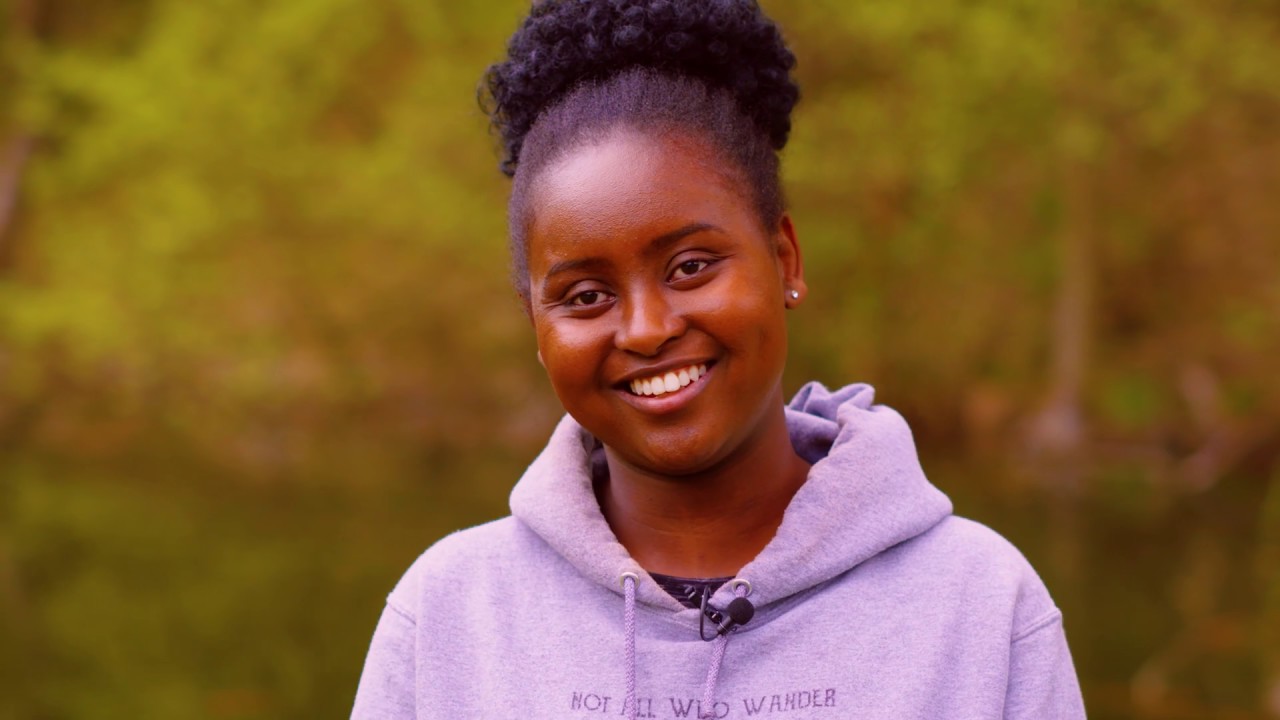
Some of our Zoology and Biology students tell us about the moments that inspired them to study the course.
Strong employer links
You can benefit from excellent opportunities for work experience, internships and volunteering, which you will be supported and encouraged to undertake.
We have excellent partnerships with organisations such as:
- Sea Life
- Derby Museums
- Derbyshire Wildlife Trust.
We are currently working with Derbyshire Wildlife Trust and Derby City Council on rewilding Allestree Park. This is the UK’s largest rewilding space which has involved a community consultation to find out what local people want. Some of our students are already working on independent studies projects in the park, with one test-driving the citizen science protocols for monitoring the changes in the park as the rewilding continues.
We have also just won two associate Knowledge Transfer Partnership with Derbyshire Wildlife Trust, lasting two years, to predict the trajectory of rewilding ecosystems. This will enable you to learn about the remote sensing and modelling we use for this. It will also enable staff to further stretch their research impact in a complex and growing subject area, as well as providing the chance to apply cutting edge, technical research to commercial activities.
We have also been working for several years with Down to Earth Derby, on nature-based regeneration and connecting communities with nature and growing food. There are lots of opportunities for you to work on here, both in creating and maintaining the site, undertaking ecological monitoring and getting involved in community education programmes.
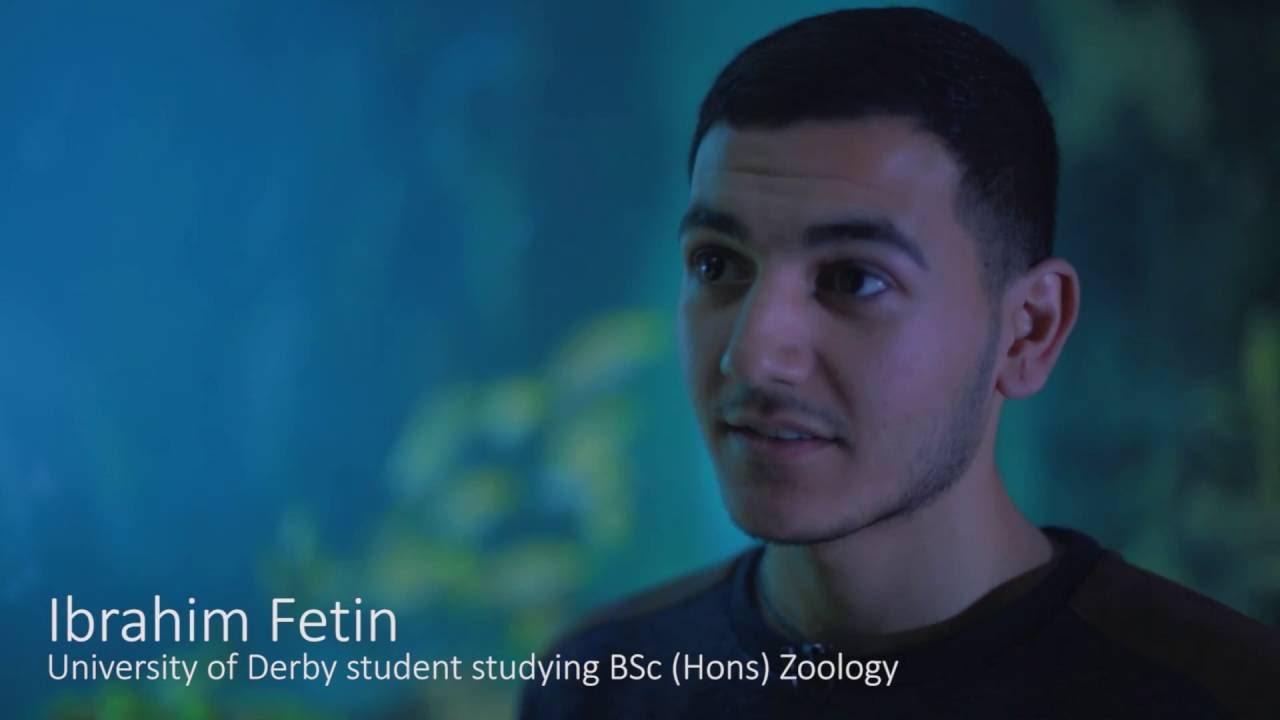
Sea Life project
Ibrahim Fetin carried out his third-year research project on blacktip reef sharks at Sea Life.
World-leading research
You will be taught by and work alongside research-active academics who will share their wealth of knowledge with you, and who are undertaking research in a wide variety of important issues.
For example, Professor Michael Sweet is carrying out world-leading research in coral restoration. Other team members like Dr Joana Carvalho, Dr Alessia Bani and a PhD student are working with Twycross Zoo and have pioneered a groundbreaking method that could play a crucial role in safeguarding chimpanzees from escalating threats and the risk of extinction.
Through our Undergraduate Research Scholarship Scheme (URSS) you can apply for funding to complete a research topic linked to your passion.
Boost your employability with a placement year
Take an optional placement year to put your skills into practice in a real-world setting. We will support you in finding a placement and throughout your time in industry. It’s a great way to gain valuable experience for your CV, build contacts, and explore career options before you graduate.
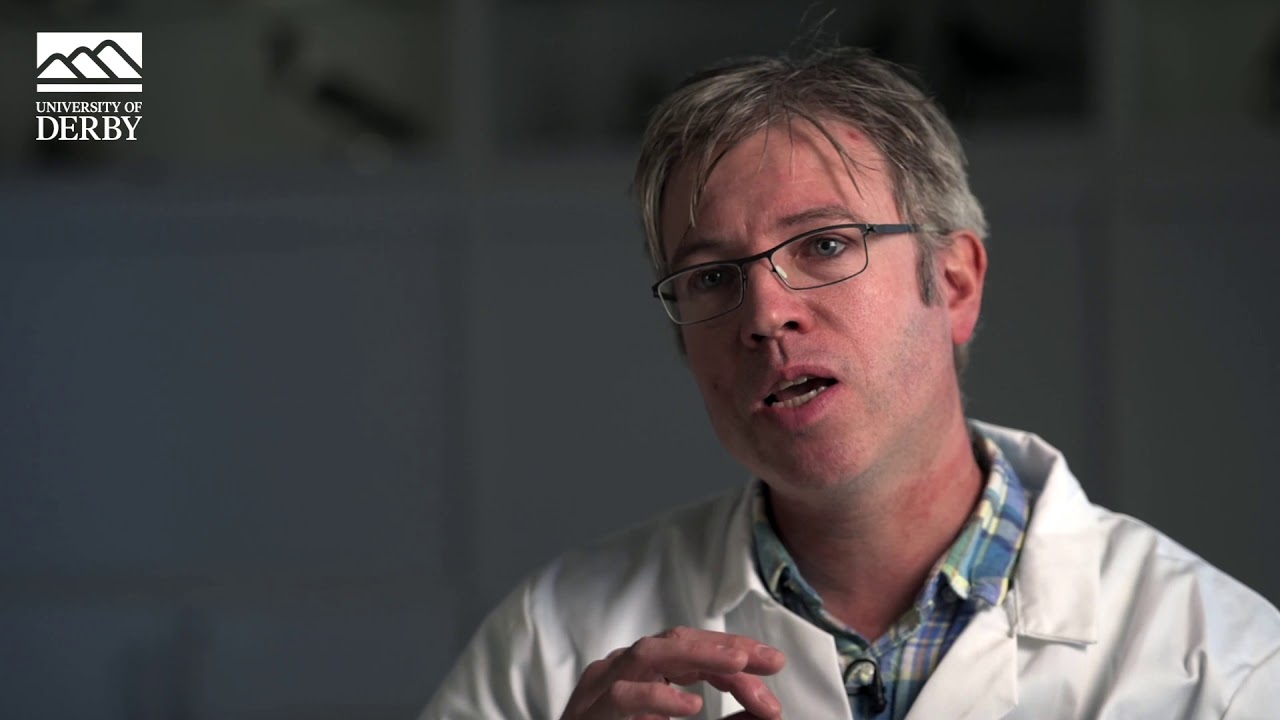
Biology and Zoology - your questions answered
Programme Leader for Biology Dr David Elliott answers your frequently asked questions about Biology and Zoology.
Please note that our modules are subject to change - we review the content of our courses regularly, making changes where necessary to improve your experience and graduate prospects.
You’ll be taught through lectures and tutorials, supported by hands-on practicals and fieldwork. You could study rutting red deer, or spend a week completing a project in the Mediterranean. You’ll also conduct an independent research project to develop your analytical skills in an area of your choice.
Assessment
Assessment is varied and includes computer-based assessments, scientific posters and oral presentations, professional reports, essays, making short videos, fieldwork and laboratory reports, as well as traditional written examinations. Many assessments can be tailored to suit your own interests and career goals.
Work placements
We offer full support to you if you decide to do a work placement in year three, which we strongly recommend. Work placement allows you to apply in a working environment the skills and knowledge you have gained on your course. This will give you more desirability in the eyes of potential employers. There is also a vocational module so you can gain credits by doing work related to your degree.
Our focus is on ensuring you develop strong intellectual, technical and personal skills to build an impressive CV and meet the needs of employers. Our hands-on approach to study will ensure you graduate ready for the world of work.
Recent graduates have gone on to work in areas such as:
- zoos and wildlife parks
- wildlife trusts
- RSPCA
- environment agency
- veterinary practices
- conservation
- teaching
- scientific civil service
- conservation campaigns.
In addition, our zoology course provides an excellent preparation if you would like to move on to further study, including medical qualifications, a masters degree or a PhD. You could choose to continue learning with us by embarking on our MSc Conservation Biology or MSc Environmental Assessment and Control - certain combinations of modules on this course will make you eligible for membership of the Institute of Environmental Management and Assessment (IEMA).
may apply to students who meet certain criteria.
These are the typical qualification requirements for September 2026 entry.
| Requirement | What we're looking for | | UCAS points | 112 |
| A Level | BBC (At least a grade C in Biology) |
| T Level | Merit |
| BTEC | DMM |
| GCSE | GCSE Maths and English Grade 4/Grade C (or above) or equivalent qualification |
| Access to HE | Pass Access to HE Diploma with 60 credits: 45 at Level 3 with a minimum of Distinction: 15, Merit: 24, Pass: 6. Must include passes in compulsory Level 3 subjects |
| English language requirements | IELTS: 6.0 (with at least 5.5 in each skills area) |
These are the typical qualification requirements for September 2027 entry.
| Requirement | What we're looking for | | UCAS points | 112 |
| A Level | BBC (At least a grade C in Biology) |
| T Level | Merit |
| BTEC | DMM |
| GCSE | GCSE Maths and English Grade 4/Grade C (or above) or equivalent qualification |
| Access to HE | Pass Access to HE Diploma with 60 credits: 45 at Level 3 with a minimum of Distinction: 15, Merit: 24, Pass: 6. Must include passes in compulsory Level 3 subjects |
| English language requirements | IELTS: 6.0 (with at least 5.5 in each skills area) |
| 2026/27 | Full-time | Part-time |
|---|
| UK | £9,790 per year | £1,220 per 20 credit module |
| International | £17,500 per year | N/A |
Further information about our fees and support you may be entitled to
Teaching hours
Like most universities, we operate extended teaching hours at the University of Derby, so contact time with your lecturers and tutors could be anytime between 9am and 9pm. Your timetable will usually be available on the website 24 hours after enrolment on to your course.
Course updates
The information provided on this page is correct at the time of publication but course content, costs and other individual course details do change from time to time and are updated as often as possible, so please do check these pages again when making your final decision to apply for a course. Any updated course details will also be confirmed to you at application, enrolment and in your offer letter.
If you are thinking about transferring onto this course (into the second year for example), you should contact the programme leader for the relevant course information as modules may vary from those shown on this page.
.jpg)
.jpg)

.jpg)
-(1)-(1).jpg)


-(1)-(1).jpg)

.jpg)
.jpg)
/prod01/derbyacuk/media/derbyacuk/assets/organisation/services/centre-for-excellence-in-learning-and-teaching/Animation-5098-0131-(1).jpg)
/prod01/derbyacuk/media/derbyacuk/assets/study/support/module-evaluation-questionnaire-promo.jpg)
/prod01/derbyacuk/media/derbyacuk/assets/study/postgraduate/Why-Choose-Derby-PG-Tutor-01---2000-x-1333-1066x1333.jpg)
/prod01/derbyacuk/media/derbyacuk/assets/study/employability/Image---employability.jpg)
-(1).jpg)
.jpg)